What 'En-Suite' Actually Means in a Kenyan Listing
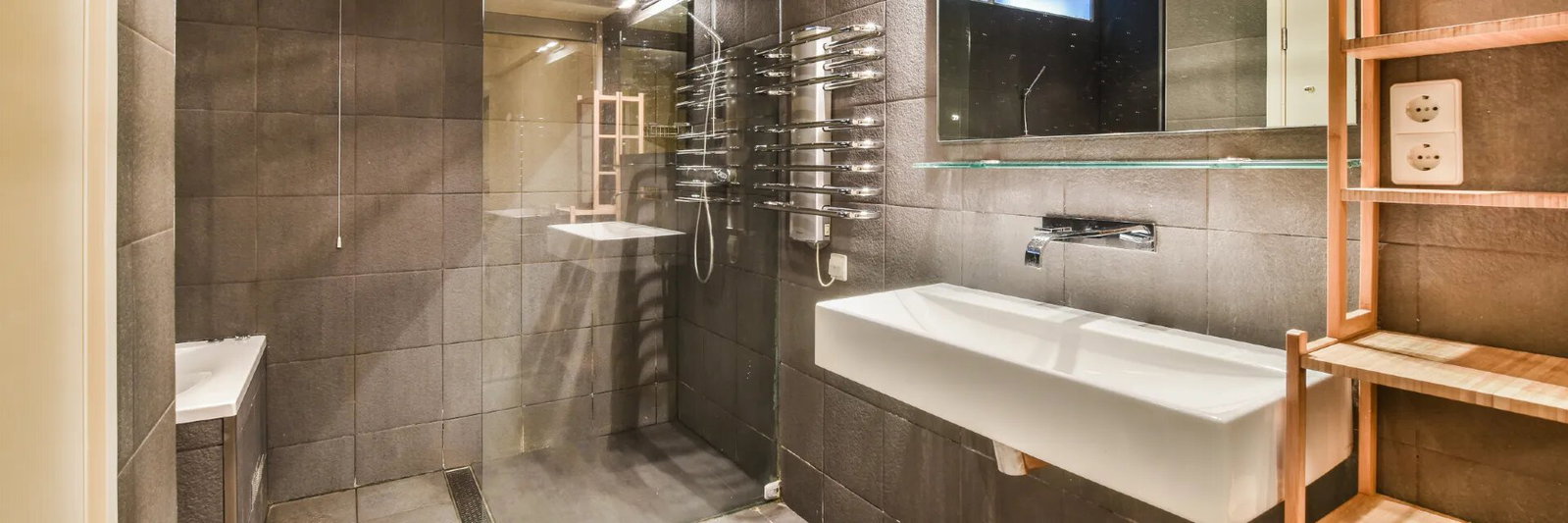
An en-suite bathroom is a bathroom attached to a single bedroom, accessed only through that bedroom. The phrase is French — en suite, in sequence — and it's been borrowed into English property listings worldwide.
In a Nairobi listing, you'll see three tags that mean very different things:
Master ensuite — only the master bedroom has its own bathroom. Other bedrooms share.
All ensuite — every bedroom has its own bathroom. The dominant aspirational spec from three-bedroom units up in Kilimani, Kileleshwa, Lavington, Westlands and Karen.
Shared — two or more bedrooms share one bathroom, with a separate guest WC.
I've walked Kilimani compounds for twelve years. The all-ensuite tag does two things at once: it changes the buyer pool (couples with children, host-and-guest households, short-let operators) and it lifts the asking price. The question isn't whether buyers want it — they do. The question is what you'll pay to deliver it and what you'll get back at resale.
Full Comparison Table
Budget refit (KES 80K-180K) vs Premium new-build (KES 500K-800K+)
| Factor | Budget refit (KES 80K-180K) | Premium new-build (KES 500K-800K+) | Winner |
|---|---|---|---|
| Wall finish | Ceramic tile to 1.2m, painted above | Italian porcelain full height or microcement single pour | Premium new-build (KES 500K-800K+) |
| Shower enclosure | Plastic shower curtain or basic framed glass | Walk-in frameless glass, 10mm tempered | Premium new-build (KES 500K-800K+) |
| Mixer / taps | Standard chrome single-lever | Brass-finish thermostatic, twin-outlet | Premium new-build (KES 500K-800K+) |
| WC | Standard close-coupled | Wall-hung with concealed cistern | Premium new-build (KES 500K-800K+) |
| Vanity | Counter-top basin on prefab cabinet | Twin vanity, quartz or porcelain top | Premium new-build (KES 500K-800K+) |
| Plumbing route | Reuse existing wet-pipe stack | Full replumb, dedicated stack, pressurised feed | Tie |
| Lighting | Surface LED fitting | Recessed LED + integrated mirror with anti-fog | Premium new-build (KES 500K-800K+) |
| Build time | 10-14 days | 28-45 days | Budget refit (KES 80K-180K) |
The Real Cost Bands in Detail
The table above shows the extremes. Most renovations land in the middle band — KES 200,000 to KES 450,000. That buys full-height porcelain, a brass-finish mixer, framed (not frameless) glass, and a partial replumb where the old stack is salvageable.
What pushes you from mid to premium isn't size. It's the porcelain bill. Italian ceramics from Florim, Marazzi or Atlas Concorde account for 60-70% of the price tag at the top end. Substitute Spanish or Turkish porcelain and you'll cut that line by 35-40% with no visible loss at viewing distance.
What pushes you from budget to mid is the shower enclosure. A plastic curtain on a budget refit is read by buyers as 'they cut corners everywhere else too' — and they're usually right. Framed glass at KES 28,000-55,000 is the smallest investment with the biggest perception lift in a refit.
Imported versus local — where the line really sits
The honest split isn't 'imported = premium, local = budget'. CTM Kenya and Diamond Interiors both stock Italian ranges at premium prices and local ranges at budget prices under one roof. The line you're paying for is fabrication tolerance — how flat the tile lays, how true the mitre cuts at corners, how consistent the glaze. That's what the finish-carpenter sees on day one and what the buyer sees on first viewing.
Does an En-Suite Actually Add Value in Nairobi?
The honest answer: yes, but conditionally. Across the Kilimani, Kileleshwa and Lavington 4-bedroom market I've tracked since 2014, going from shared to all-ensuite lifts asking price by 10-15%. The lift holds when three things are true:
The build quality of the rest of the house matches the bathroom upgrade. Premium tile in a house with hollow doors reads as lipstick on a pig.
The title deed and beneficial ownership are clean. A buyer paying the premium will instruct a search, and any cloud kills the deal. Verified neighbourhood by neighbourhood — that's how I check this before a listing goes live.
The layout doesn't sacrifice a bedroom to add the en-suite. Squeezing a third bathroom into a 2-bed apartment by stealing wardrobe and kitchen pantry destroys more value than the en-suite creates.
Where it doesn't hold: studio and one-bedroom apartments where the existing bathroom is already private, conversions that lower the bedroom count from 3 to 2.5, and old houses on small plots in Buruburu, Donholm or Umoja where the asking-price ceiling won't move regardless of fittings.
"An en-suite earns its premium only when it's paired with build quality and a clean title deed. Strip either one and the price you're quoting isn't real.
— Francis Ouma, Leissure Homes Kenya
-
Water-pressure upgrade: booster pump (KES 25K-60K) plus pressurised tank (KES 35K-90K). Nairobi mains pressure rarely supports a rain shower without help.
-
Drainage stack reroute: KES 40K-180K depending on slab penetration and whether you're cutting through a suspended floor on an upper storey.
-
NCA-registered contractor plus Nairobi City County plumbing endorsement: KES 8K-30K in fees, plus the contractor's NCA Class registration cost loaded into their quote.
-
16% VAT on imported ceramics, mixers and glass. Visible on the supplier invoice, never on the contractor's headline number.
-
Contractor margin: 15-25% sits between the line-items, declared or not. Ask for it explicitly and you'll see whether your contractor is transparent or padding silently.
Design Trends Nairobi Buyers Are Specifying Now
Five specs come up in nearly every premium-band brief I'm handed in Kilimani and Lavington right now. None of them are about square footage — they're about what photographs well in the listing and what feels considered on the first walk-through.
Walk-in frameless glass enclosure
The framed shower box has aged out of the premium band. Frameless tempered glass — 10mm minimum, single pane — is what buyers expect in any Lavington new-build above KES 40M. Cost: KES 65,000-180,000 fabricated and installed, depending on the pane size and the hardware finish.
Microcement single-pour walls
Microcement replaces tile with a continuous trowelled surface — no grout lines, no maintenance halo, no grime traps. It costs more on the day (KES 4,500-7,500 per square metre installed against KES 2,800-4,200 for porcelain) but it photographs better and lasts longer. Kilimani and Westlands apartment refits have moved toward microcement on the wet wall behind the vanity even when porcelain stays elsewhere.
Twin vanity with quartz or porcelain top
In 4-bedroom Lavington new-builds, the twin vanity is no longer optional in the master en-suite. Couples viewing together register it within five seconds of opening the door. Quartz top runs KES 35,000-70,000 per square metre; porcelain top runs KES 22,000-45,000 — the porcelain alternative looks identical at viewing distance.
Integrated LED mirror with anti-fog
The KES 22,000-65,000 mirror is the disproportionate-impact item in listing photography. The lit edge reads as 'this property was considered, not built down to a price' in every photograph. Specify a model with the anti-fog heating element if your extractor is undersized — and most are.
Half-pony walls
The half-height wall between the WC and the shower wins in Kileleshwa apartments where you can't afford to lose light from the window. It feels generous without the cost of a full partition. Common in apartments built since 2022 and now retro-fitted into older Kilimani 2-beds during refits.

All-Ensuite vs DSQ: The Trade-off Karen Buyers Still Negotiate
The Domestic Staff Quarters has been the silent floor-area trade-off in Nairobi family housing for decades. Build a DSQ and you lose the square metres that would have funded a fourth or fifth en-suite. Skip it and you've made a statement about how you intend to live.
In Karen, Runda and Lavington, owner-occupier households with live-in staff still prioritise DSQ over a fifth en-suite. The DSQ-led layout trades at the same premium, sometimes higher, when the buyer pool is dual-income executive families who entertain. Skip the DSQ and you've narrowed your buyer pool to households that don't live this way — a real choice, but one your agent should tell you you're making.
Kilimani and Westlands apartments handle the question differently. Building rules and service-charge math make DSQ impractical in 90% of strata stock built since 2018. The aspirational spec defaults to all-ensuite by elimination. If you're buying in this segment, the DSQ question doesn't apply — what matters is whether the en-suites are sized correctly and the water pressure was solved at construction.
Minimum Size — and Why Some Builds Get This Wrong
The numbers above are functional minimums. The mistake I see in Nairobi conversions — particularly older Lavington and Kileleshwa houses where the en-suite has been shoehorned into former DSQ leftovers — is dropping below 1.6 square metres in total floor area.
At that footprint you've built something that legally meets the plumbing by-law and visibly fails the buyer's smell test. Knees hit the basin when you sit on the WC. The door swings into the shower or scrapes the basin pedestal. Listing photographs come out distorted because there's no shooting angle that reads as generous. You'll struggle to recover the spend.
NCA Approval: When You Need It, When You Don't
The line is structural change. Stay inside the existing wet-pipe footprint — replace tile, replace fittings, replace the mixer, change the WC — and you don't need NCA registration or a Nairobi City County plumbing permit. This is a cosmetic refit and it falls under the homeowner's authority.
Cross that line and you do. Adding an en-suite where there wasn't one, rerouting drainage through a new slab penetration, adding a new pressurised feed off the mains — these trigger NCA registration. You need a contractor at the correct Class for the project value. You also need a Nairobi City County plumbing permit before the slab is cut.
Strata apartments add a third party: the Body Corporate. Under the Sectional Properties Act 2020, alterations affecting common services — and the main water and drainage stacks are common services in nearly every Nairobi apartment — require written consent. Get the consent before you sign the contractor's first invoice, not after the neighbour below sees water on their ceiling.
Buyer-Segment Playbook
First-time buyer under KES 15M
One ensuite (master only) is enough. Direct the marginal shilling into build quality — solid-core doors, properly hung kitchen carcasses, mains-fed pressure system — not bathroom count. Buyers in your eventual resale window care more about whether the house feels solid than whether the second bedroom is en-suite. Browse Kilimani houses for sale to compare spec at this price point.
Buy-to-let investor
All-ensuite is the right call for 2-3-bedroom Kilimani and Westlands apartments targeting expat and short-let tenants. The rent premium covers the build cost over a 36-month hold. Don't try this in older buildings where mains pressure won't support multiple simultaneous showers — you'll generate complaints that kill renewal rates.
Luxury owner-occupier (Lavington, Karen, Runda)
All-ensuite is table-stakes from the brief stage. The upsell that buyers register is the master suite spec: twin vanity, walk-in frameless glass, separate WC, microcement on the wet wall. Compare Lavington houses for sale currently listed to benchmark expectations.
Diaspora remote buyer
Insist on three documents in writing: the NCA registration certificate of the contractor (current year, correct Class), the Nairobi City County plumbing permit if the work is structural, and a 12-month plumbing warranty signed by the contractor with named individuals attached. I've managed offshore client refits in Syokimau and Kileleshwa for four years without the client visiting — the only way that works is the paperwork carrying its weight from day one.
Featured all-ensuite houses for sale in Nairobi
Explore Houses For Sale in Nairobi — verified listings from licensed agents.
Frequently Asked Questions
Sources & References
- [1] National Construction Authority Kenya — Contractor Registration Classes and Project Notification under NCA Act CAP 412C — Visit NCA
- [2] Nairobi City County Government — Building Code and plumbing permit schedules — Nairobi City County
- [3] Kenya National Bureau of Statistics — Survey of Construction Inputs (quarterly bulletin) — KNBS construction data
- [4] Kenya Revenue Authority — VAT Act 2013, standard 16% rate on imported sanitary ware — KRA VAT guidance
- [5] Kenya Law — Sectional Properties Act 2020 (Body Corporate consent for material alterations) — Read the Act
- [6] Kenya Law — Public Health Act CAP 242 (statutory drainage and ventilation requirements) — Public Health Act
- [7] CTM Kenya — bathroom fittings retail price benchmarks — CTM Kenya catalogue